

Blank guns are widely used for training, film production, and personal safety simulation, but like any mechanical device, they can develop issues that affect their performance. From misfires and weak discharge to feeding and ejection problems, even small faults can lead to unreliable operation or safety concerns if ignored. Understanding how these problems occur, how to recognize early warning signs, and what simple fixes can resolve them is essential for anyone using a blank gun. In this guide, we break down the most common blank gun problems, explain why they happen, and share practical, safe solutions to help you maintain consistent performance and avoid costly mistakes.
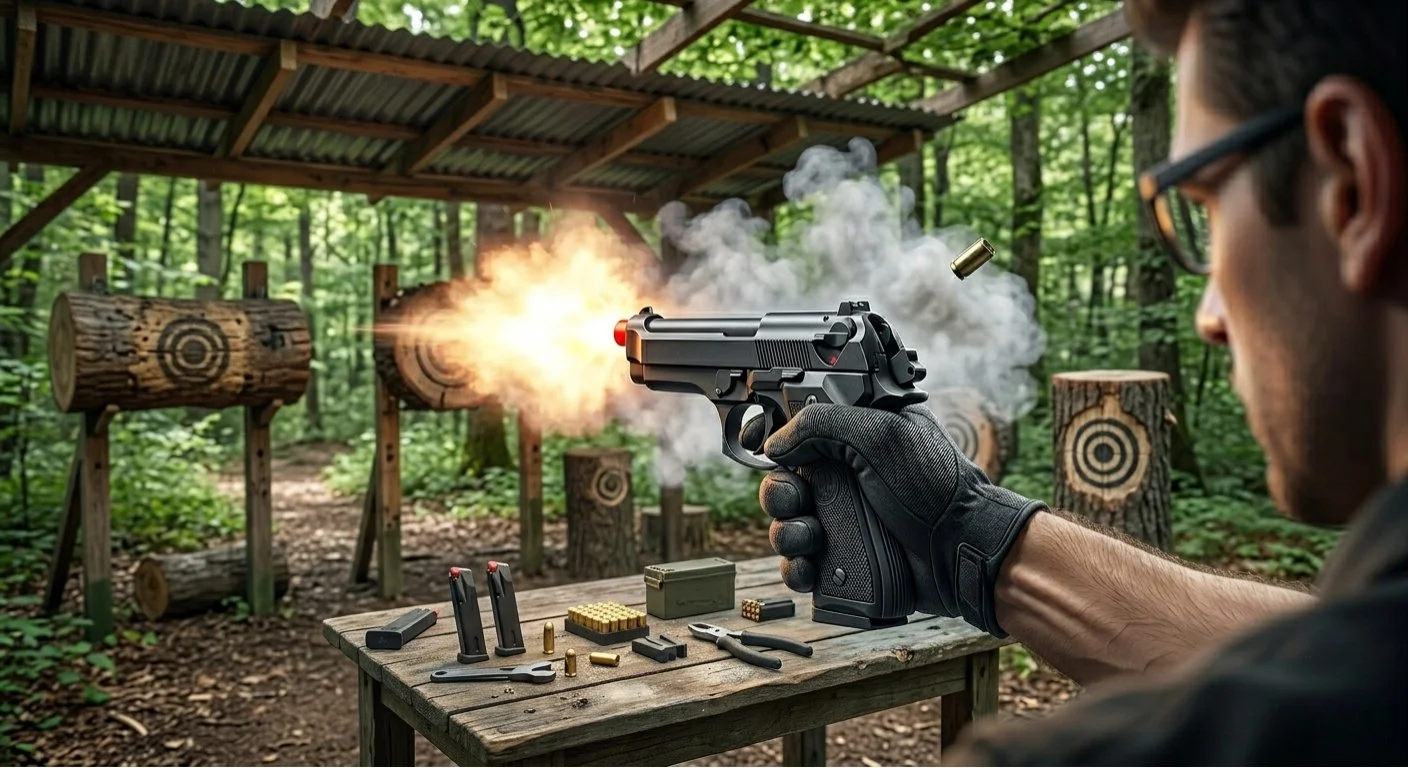
Recognizing Blank Gun Issues and Easy Fixes
From what I’ve personally seen while handling blank Gun malfunctions, knowing why they happen is what truly makes it much easier to fix problems without second-guessing. When it comes to blank misfires, they can occur due to several reasons, and understanding them properly is always the first step before applying any fixes.
–Squib Loads
With blank guns, a squib-like situation usually feels like a weak bang or when you pull the trigger and something just feels off. Even though there’s no projectile, low gas pressure from poor ammo can interrupt the cycle.
How fix it: stop immediately, check the chamber, and make sure nothing is partially stuck. Then rack the slide to clear it and try a fresh round. In my experience, this often comes down to low-quality blanks or inconsistent loads.
–Cartridge Feed Error
Blank guns are more sensitive to feeding because they rely heavily on proper magazine alignment and pressure. If a round fails to enter the chamber, you’ll notice the slide doesn’t go fully forward.
How fix it: tap the magazine, verify it’s properly seated, then rack and reassess. If it still doesn’t load, remove the round, inspect it, and switch to fresh ammo. Slight variations in blank size can easily cause this.
–Mechanical Issues
Blank guns often face mechanical issues due to carbon buildup from repeated blank firing. This affects the firing pin, striker, and overall cycle. You might get a light strike or inconsistent firing.
How fix it: regularly clean the internal parts, especially around the chamber and gas pathways, and inspect the firing system. If parts feel weak or worn, it’s best to replace them early before failures increase.
–Primer Failure
This is very common with blanks. You pull the trigger, hear nothing, and later see the primer lightly dented but it didn’t ignite.
How fix it: tap, rack, and reassess, then swap in a fresh round. From what I’ve seen, blank ammo issues—especially cheap or poorly stored rounds—are the main cause here. Always check your batch before use.
–Failure to Eject
Since blank guns depend on gas to eject, weak pressure often leaves a spent casing stuck in the ejection port. This blocks the next round and stops the cycle.
How fix it: rack the slide forcefully, lock it open, and remove the stuck casing. Then clean the area and make sure your grip is firm—yes, even with blanks, poor handling can affect eject performance.
Why does it happen?
From what I’ve seen, most problems start when small things get ignored—ammo issues, a dirty mechanism, or a weak strike from the firing pin. Sometimes you pull the trigger and get nothing, not because the gun is faulty, but because the round didn’t ignite or failed to cycle properly. Poor maintenance, low-quality blanks, and improper handling all add up, turning a simple situation into repeated malfunctions if you don’t check and address them early.
Understanding System Failures
- Did the firearm discharge but the spent casing remained inside? → Ejection malfunction
- Did you hear a click but the round didn’t go off? → Ignition failure
- Did the cartridge fail to load into the chamber properly? → Feeding issue
- Is the firearm jammed with more than one round trying to load? → Multiple-feed malfunction
- Why trigger hard? → Clean parts
- Why is the cartridge stuck? → Remove carefully
- Why are sparks missing? → Check firing-pin
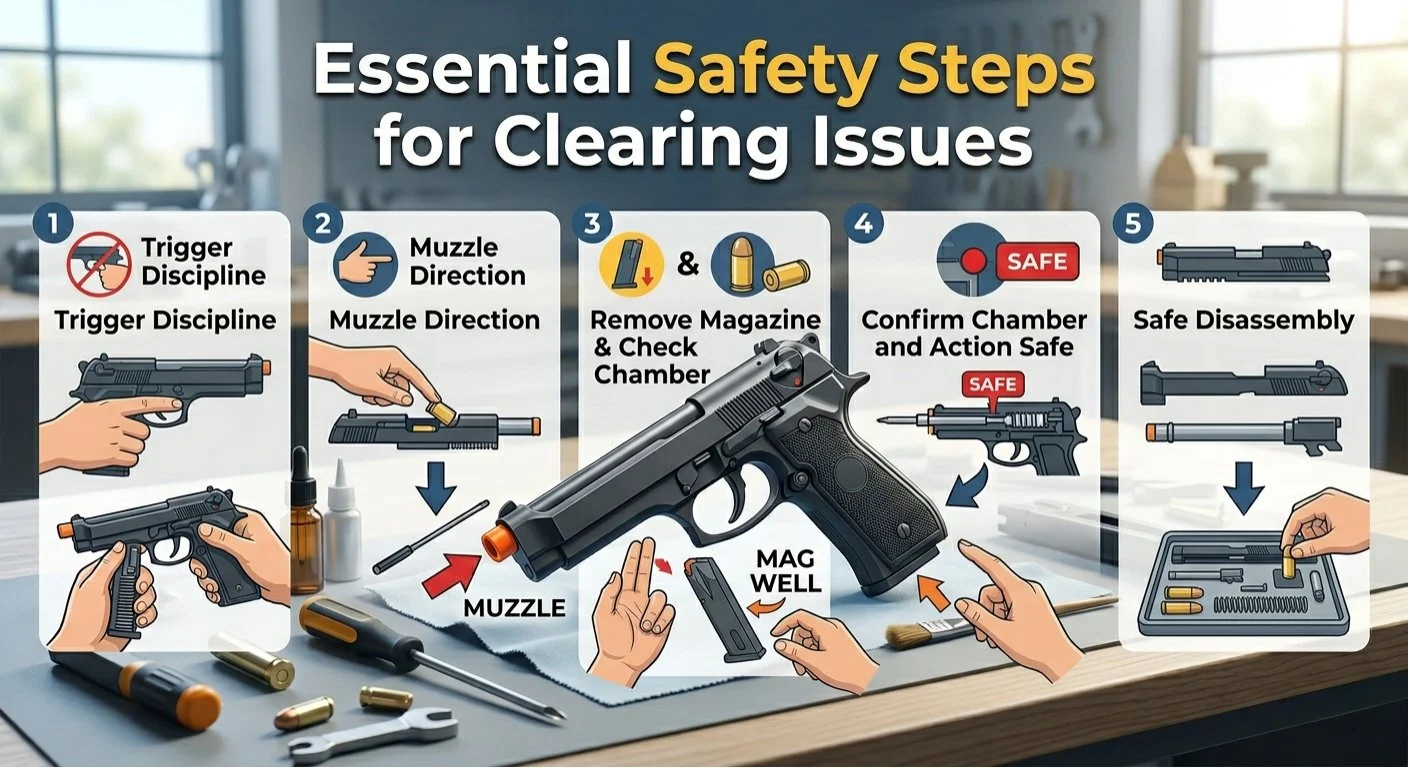
Essential Safety Steps for Clearing Issues
With blank guns, people often underestimate risk because there’s no bullet—but in reality, gas pressure, ammo issues, and mechanical issues can still cause serious problems. From my experience, handling a jam or misfire safely is more about control than speed.
- Always point the firearm in a safe direction, even if you pull the trigger and nothing happens
- Wait a few seconds before reacting—some blank rounds can have delayed ignite (hang fire)
- Remove the magazine and verify it’s fully out before touching the chamber
- Lock the slide open and inspect for a stuck spent casing or unfired round
- If there’s a blockage, gently remove it—don’t force anything through the ejection port
- Use tap, rack, and reassess carefully to cycle the system only when safe
- Never try to fire again immediately after a misfire—always check the ammo first
- Keep a firm grip and proper stance, since poor handling can affect eject and cycling
- After clearing, inspect, clean, and test with a fresh round to ensure everything works properly
Avoid These Mistakes for Beginners
When I first started handling blank guns, I made the same mistake most beginners do—I underestimated them. Just because you pull the trigger and sometimes nothing happens doesn’t mean you can be careless. Over time, I realized that small habits make a huge difference in avoiding constant issues and keeping the firearm running smoothly.
- Treating it like a toy — I learned early that even blanks demand respect; always handle the firearm seriously
- Ignoring ammo issues — I’ve had rounds fail to ignite just because the ammo quality was poor
- Not checking the magazine — forgetting to verify it’s properly seated caused me unnecessary feed problems
- Weak grip and poor stance — I noticed poor handling affects how the gun cycle and eject
- Forcing a round to enter the chamber — I once caused a jam by not stopping in time
- Skipping clean routines — blank guns get dirty fast, and neglecting this leads to mechanical issues
- Not using tap, rack, and reassess — this simple habit has saved me from bigger problems
- Failing to inspect after a misfire — always check the primer, round, and chamber carefully
- Continuing to fire after a problem — now I always stop and reassess the situation before going further
Explore High-Quality Blank Guns That Don’t Fail Easily
Not all blank guns are built the same — choosing the right one makes a huge difference in performance and reliability. At Shoot Blank Gun Shop, we focus on providing carefully selected blank guns that are tested for durability, smooth firing, and consistent results. If you want to avoid common issues and enjoy a dependable experience, exploring high-quality options from a trusted source is the best place to start.
Explore more:
